
When We Forget Love (And How Life Reminds Us)
- Michael Fidler
- Nov 15, 2025
- 6 min read

When We Forget Love (And How Life Reminds Us)
By Mike – Ondaroof
I didn’t arrive at these thoughts sitting on a mountain, or in a quiet cabin, or after retiring with a big savings account and a clean bill of health.
I arrived here in a wheelchair, with a body that doesn’t always cooperate, after watching my dad decline, after talking with elders on hospice who suddenly see life with crystal clarity — just when they have the least time left to use it.

If you’d known me years ago, you might say,“He only talks like this because he got sick and can’t chase money anymore.”
And you’d be partly right.
My illness did slow me down.But it didn’t create this way of seeing — it simply stripped away the noise so I could finally hear what was always there.
What I’ve come to believe is simple:
We are born knowing love.We forget it.Then life — sometimes gently, sometimes brutally — tries to remind us.
This blog is about that forgetting… and that remembering.
We All Start With the Same Gift
Watch a baby for five minutes and you’ll see it:
They reach out.They cry when others cry.They light up when someone smiles.They don’t care about race, money, titles, or who owns what.
Before we learn anything else, we know how to:• connect• trust• reach for comfort• give comfort without thinking
Kahlil Gibran wrote that our pain is the “breaking of the shell that encloses our understanding.”I think our first understanding is love — and life slowly builds a shell over it.
Not because we’re bad.Because we’re scared.
How Fear Slowly Replaces Love
Somewhere along the way, we start hearing different messages:• “You have to be better than others.”• “Money is safety.”• “Don’t let anyone take advantage of you.”• “Be tough.”• “Don’t be so sensitive.”• “Success is winning, not just living.”
At first, love is our default and fear is the exception.Then fear becomes the default and love has to sneak through the cracks.
We learn to:• compare ourselves• compete• protect• perform• chase status• hide weakness
Marcus Aurelius, a Roman emperor who could have drowned in ego, wrote about how short life is and how little control we truly have. Even with all that power, he was reminding himself not to get lost in pride, anger, or greed.
If an emperor had to fight that battle inside himself, what chance do the rest of us have?
The Fast Lane Makes Us Forget
Before MS, I was always moving:
Military.Paramedic.Civilian life.Work.Bills.Responsibilities.Trying to do right by my family.Trying to make something of myself.
Nothing wrong with that.But there’s a cost to always moving:
You don’t get to see what your own soul has been trying to show you.
When you’re rushing:• you don’t notice the lonely person beside you• you don’t question unfair systems• you don’t stop to ask, “Is this love, or just habit?”• you don’t see how fear is running the show
Illness slowed me down.Disability locked me into a pace I never would’ve chosen.
But in that slowness, I started seeing clearly:• elders in my building who have lost almost everything, but still light up at connection• people on hospice who suddenly know exactly what matters• my own heart getting softer, not weaker• the difference between “having a good life” and being truly alive
The Moment You See It, You Can’t Unsee It
Once your eyes open, it becomes impossible to look at certain things the same way again:• religious leaders flying private while members walk to church• billionaires collecting more while children go without food and clean water• people calling the poor “lazy” while never once having lived a day in their shoes• families divided over ego, control, and religion while using “love” as a label instead of a practice
I used to think,“Maybe I’m being too harsh. Maybe I’m just bitter.”
But when I sit quietly, when I listen to that deeper place inside…
It says:
“Love doesn’t look like hoarding.Love doesn’t look like stepping on people to rise.Love doesn’t look like hierarchy, favorites, or exclusion.Love is not afraid of equality.”
That voice inside?That’s not anger.That’s the part of me — of us — that remembers how we started.
Was It Really the Illness That Changed Me?
People say:“You turned this way because you can’t work like before. If you were still in the game, you’d be chasing things like the rest of us.”
Here’s my truth:
Yes, illness knocked me out of the race.But it also showed me the race was never the point.
I look back at my jobs — paramedic, military, helping strangers in crisis — and I see I’ve always cared about people. I’ve held the hands of the dying. I’ve watched families shatter in hospital hallways. I’ve seen so much pain that there’s no way I can pretend money is the highest prize.
So no, I didn’t “become” compassionate because I got sick.I finally had the time and stillness to live out the compassion that was always there.
My MS didn’t give me a new heart.It just stopped me long enough to hear the one I already had.
The Elders, the Dying, and the Ones Who See Clearly
If you really want to know what matters, talk to:• someone on hospice• an elder who has outlived friends, siblings, and sometimes their own children• a person who lost their health and had to rebuild their identity
They don’t care about:• the brand of your car• how big your house is• what your title was• how many followers you have
They care about:• whether you showed up• whether you were kind• whether you listened• whether you loved honestly• whether you forgave• whether you made someone feel like they mattered
Viktor Frankl, who survived the concentration camps, said that those who found meaning in suffering could endure almost anything.The meaning I see now is this:
We are here to remember love —and then pass that remembering on.
Why Don’t Healthy People Want to Hear This?
I’ve tried to share some of this with people who are still in the “fast lane.”Most of them smile politely, change the subject, or say something like:
“Yeah, but you don’t understand what it’s like out here. We’ve got to hustle.”
And I get it.
When you’re:• young• strong• busy• grinding for success• scared of slowing down
…this kind of message sounds like a lecture, or worse, like giving up.
But I’m not giving up on life.I’m waking up to it.
There’s a difference.
I’m not saying:“Quit your job. Stop trying. Don’t build anything.”
I’m saying:Don’t wait until you lose something — your health, your parents, your mobility, your time — to realize love was the point all along.
Why We Forget — And How We Can Remember Sooner
So why is it so hard to keep love as the main goal?
Because:• fear is loud• ego is praised• speed is rewarded• power is admired• money is worshipped• vulnerability is mocked
Love is quiet.Love is patient.Love is often inconvenient.
It’s easier to say, “I’ll get to that later,”than to slow down now and feel what’s really going on inside.
But here’s the good news:
We don’t have to wait for illness, loss, or old age to remember.
We can start now by:• listening more deeply• questioning systems that don’t feel fair• choosing “enough” instead of “more, more, more”• paying attention to the people who are often ignored• asking: “Does this feel like love, or like fear?”• being willing to be wrong if love shows us a better way
As Rumi said,“Love is the bridge between you and everything.”
The tragedy is not that we’re born without love.The tragedy is that we forget we’re walking around with the bridge already inside us.
Why I’m Writing This
I’m not writing this because I think I’m better than anyone.I’m not writing this because I’ve “arrived” or have all the answers.
I’m writing this because:• I’ve seen enough pain to know what really matters.• I’ve slowed down enough to feel what my spirit always knew.• I’ve talked to enough dying people to understand what they regret and what they cherish.• I’ve watched people chase everything the world told them to chase… and still feel empty.• And I’ve watched others lose almost everything and still sit there glowing with gratitude and peace.
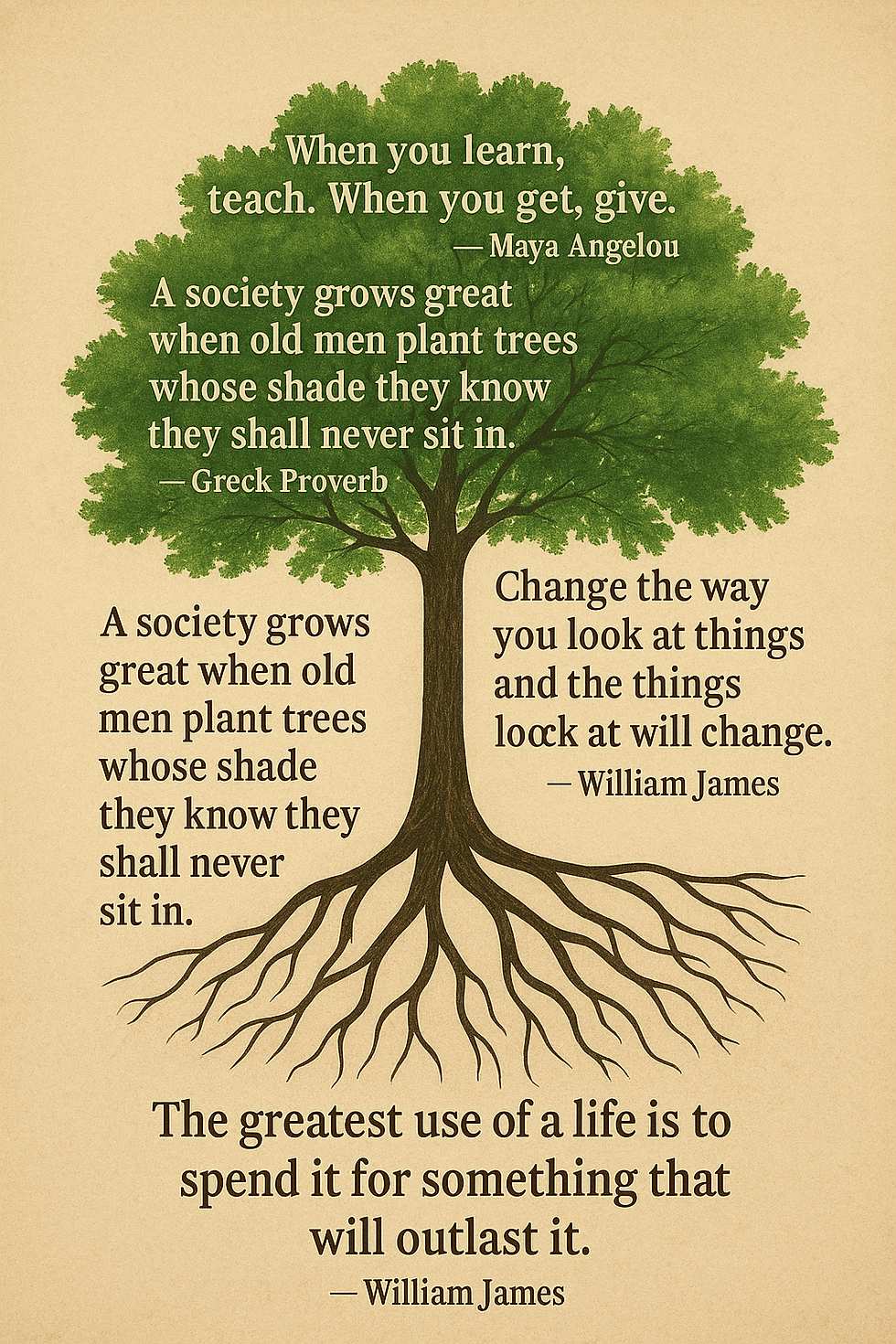
I want this series to live on long after I’m gone,so that someone — maybe a stranger, maybe a grandchild, maybe a tired nurse, maybe a person who just got a diagnosis — can read it and feel:
“I’m not crazy for wanting more love and less noise.I’m not weak for wanting fairness.I’m not naive for believing we were made for something deeper.I’m not alone in seeing the world this way.”
Because you’re not.I’m right here with you.
And this is just the beginning.
— Mike (Ondaroof)


Comments